
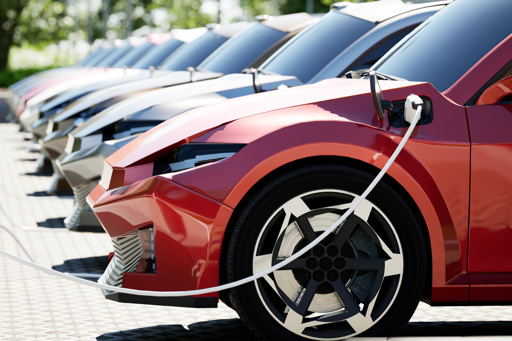
EVs don’t have direct emissions. Thank goodness a study showed that. They also tend to be cheaper to drive over time, once purchased, electricity costs are usually a lot lower than a tank fill up thanks to the difference in cost and the efficiency of EVs. Now we have a study from MIT showing what everyone has been saying all this time is true.
Now what?
The government should push hard on regulation to provide an infrastructure support for EVs, such as charging areas everywhere, including apartment dwellings and common retail areas. Make them solar assisted. They should run regular buy back programs to incentivize trading in older ICE cars. Any public service using vehicles should be transitioned to EVs - buses, mail, trash collection. Anything that does a lot of local stop and start movement, which is where EVs excel at their efficiency and emissions reduction vs. ICE. And while we’re using the government to improve EV conversion, how about also improve public transport (which should be all EV) to reduce the car count on the road even more.
Like everything else, we should have been doing this decades ago, as this isn’t news to anyone. Hopefully this still has enough of a positive spin for this forum.
Unfortunately there is a large contingent of people who would literally rather die than have their out-group have something nice like public transit. (It’s conservative whites)
I started reading “dying of whiteness” and it’s infuriating
Reminds me of suburbs in Dallas wanting to withdraw from DART because it doesn’t benefit the rich enough. The same ones that employ cleaners and other household personnel that don’t own cars….
EV are super hard on tires. And tires are a huge source of microplastics.
Clearly the only manageable solution moving forward is our need of robotic horses.
Heavy EVs with ridiculous battery packs are hard on tires. Smaller EVs with reasonable packs are not.
The lightest EVs are still kinda heavy. The Nissan Leaf and the Chevy Bolt are nearly 4000 lbs, significantly more than a Honda Civic (high 2000’s or low 3000’s) comparable to a BMW M3, a much larger vehicle.
Plus some of the faster tire wear comes from the fact that EVs have such high torque from a stop. It’s great for the driver experience, but tough on the tires.
Less vehicles is certainly a goal, and maybe some of them back on rails like they were before the auto industry drove them away from most urban areas. Also a US centric problem, but less sprawl and need for distance traveling, more common needs locally within foot and bike traffic would help too. It’s all connected and contributing to the issues at hand. If we designed cities from the ground up, we could make them so much better, but cities don’t grow that way over time, nor can they be changed that easily.
Not everyone wants to live in a densely populated area though, so not just cities. Many are stuck distance traveling for jobs that could be done remotely, too, with no real means of public transportation. Sure, it exists, but too many variables for too many people so its not convenient.
So many city-based people don’t understand how the rest of the country functions… Very close/narrow-minded to just assume everyone else should be able to adjust/adapt their lives to what works for them.
About a week ago, I picked my kid up from college about 90 miles away. While doing small talk with other parents, one said “you must be really brave to drive an EV that far”.
Among the many misconceptions here, there was a supercharger in town and others along both possible routes
I would have responded with “your kid is clearly the first in the family to attend college”
We would need some sort of actual movement into public transport first. The original cash for clunkers was awful for the used car market in such a way that it affected the poorer population. It used to be easy to grab a decently used but neglected car for cheap and spend enough to keep it out of the junkyard for a few years more. I remember being able to grab a 20 year old used truck that was quite beat for $800 all day.
The cash for clunkers removed that cheap tier of used vehicle and forced people to buy new which exacerbated the new car purchase price. It’s only ever climbed quickly ever since as manufacturers took that as “people don’t want cheap cars, only luxury” and now options are fairly garbage.
And Covid did a number on prices too that hasn’t recovered. I purchased a new Golf in 2015 (right before dieselgate) for $16k as it was a base model with a standard trans. You can’t get that anymore.
Cash for Clunkers didn’t really have the negative effects that people purport it to have had. Only 677K vehicles were scrapped out of 246 million in the nation (less than 0.3%). I do agree it was more of a benefit to wealthier people due to the fact that you needed to buy a new car to use it, but what really hurt the poor was the recession happening at the time which drove up the cost of used vehicles since fewer people were buying new.
Nice! Next step: Make it all public transport.
It’s a shame there aren’t any electric cars I actually want, at least in the US
Have you checked out the slate truck?
Yeah but I don’t want a truck
You have plenty to choose: Electric Soapboxes on wheels or pretty looking coffins with door handles that ensure you burn inside.
for whom does it not offer emissions benefits? Which people emit a magical aura that causes electric cars to somehow produce more emissions than combustion engines?
I just got back from an overnight trip.
Avoiding highways to get the best mileage I could (ended up with +50 miles for technique in spite of terrain being hilly/curvy and using air conditioning /flex) it was a 3-hour drive both ways. I charged my car at home before leaving, which was cheap, and when I got to my destination, I charged at the city hall charger, which was free. Most chargers around me that are maintained by town/city governments are set to be free, which makes planning trips pretty easy for cost savings.
Total cost for the transit portion of the trip, including the post-trip home recharge: under $5.
The same trip in the ICE vehicle we had available would have been about 10 gallons, or around $50.
So yeah, I’m pretty happy with the cost savings. Plus it’s dead quiet, which is highly pleasing on long trips, makes the whole thing surprisingly less shit. (I dislike driving, generally, but driving an electric is actually pretty nice)
They also smell nicer.
No gross gasoline and oil smell
gasoline smell good.
Unfortunately US drivers are all afflicted with a terrible genetic condition that causes your penis to fall off if you ever try to drive one. Awful shame really.
My cajones definitely got larger once I got an EV. Trying to cut me off at an entrance ramp, Ford F-150? Let me show you what acceleration actually looks like.
…and that’s in “eco” mode 😁
deleted by creator
What if it’s an F150 Lightning?
There’s so few of them it’s statistically unlikely.