The bill cleared the Assembly and Senate with bipartisan support on Wednesday night and now goes to Governor Gavin Newsom. If he signs it, compatible systems could...
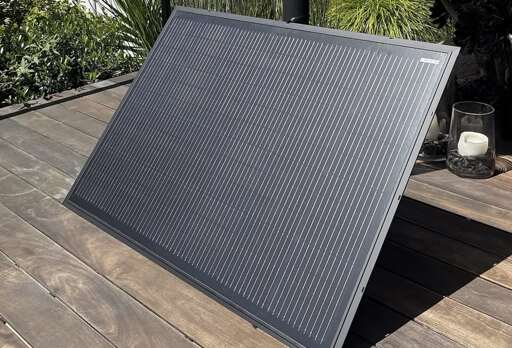
Such a “balcony” system isn’t going to be 600 watts. I’ve got a pair of 100 watt panels that together would each make a fairly good awning for any of my windows. I also have a 200 watt Anker brand panel (one of those weird ones that feels like it’s made of a quarter inch thick sheet of denim) that’s the size of a beach towel. 6 of those 100 watt panels would come close to the size of queen-size bed. You’re not going to have many apartment dwellers dangling something that big out the window.
Most people most of the time don’t have circuits loaded to the very edge of the envelope. If you plugged it into a circuit that’s drawing 10 amps…it’ll still draw 10 amps. It’s just that ~8.2 of them are coming through the breaker, the other ~1.8 are being provided by the solar panel.
It does still sketch me out a little because it breaks certain fundamental design rules of the power grid. Power should come from female sockets not male plugs, and it should come from before a breaker, not after.
Most people most of the time don’t have circuits loaded to the very edge of the envelope.
Unfortunately this is awful terrible engineering ethics and does not fly in the real world. “Most” implies that there WILL be a nonzero number of edge cases where someone does have circuits loaded to within an inch of their lives, and a plug-in solar system will lead to a house fire.
I would agree. Hence why I said “This isn’t how I’m doing my personal solar power.”
Apparently American units are coming with an outlet you install in place of a standard outlet which does monitor the combined power, so the building will have to be modified slightly. Still…any more than a couple hundred watts, if you can, have a proper system installed.
Apparently American units are coming with an outlet you install in place of a standard outlet which does monitor the combined power
This doesn’t sound right: measuring at one outlet doesn’t grantee you’re measuring the full circuit load unless you can be absolutely sure it’s the very first outlet in a branch circuit specifically. A ring circuit throws that idea out entirely. To measure reliably, you’d have to measure at the breaker itself as well as the solar inverter.
Maybe a replacement breaker, that measures and comunicates with the imverter?
You run into compatibility issues with the different electrical panel manufacturers though…
Idk, I’ll have to get my hands on one of these kits when available and look closer.
I picked 600w for nice round amperage numbers in the above math; even just a few hundred watts presents the same issues though. You could fit a decent size set on the balcony, covering the outside of the balcony railing.
I wouldn’t be so sure on the second point. I live in a 3bed apartment with 2 main outlet circuits. 1 supplying the livingroom and half of one bedroom. Another supplying the other two bedrooms + the other half of the 3rd bedroom.
Between the main entertainment/lighting electronics in the livingroom, the portable ac in the adjoining bedroom, the watercooler/heater, and recently a set of ebike battery chargers; that circuits base load sits around 6.5a during a charge cycle, with peaks right around 15a when the ac runs+the water cooler, occasionally peaking right up to 16.5a. I’ve tripped the breaker a few times running the vacuum at the wrong time ontop of those.
The other bedrooom circuit is similarly loaded with a couple computers, device chargers, and another ac (cooling is crap in this place plus our unit faces the sun all day); though not quite as heavily as the other circuit.
The living room circuit is where a solar system would be installed (it’s where the outdoor outlet is connected) and the main appeal of a system like that is not having to modify wiring since we’re not allowed to touch that as tennants (the corporate landlord is rather unlikely to allow modifications even from a licensed electrician either).
Supposedly the solar inverter would shut off during a mains power outage, but is it fast enough to prevent shock if the plug was disconnect and touched?
IDK, interesting systems, just curious about them. I’ll have to look closer when they’re actually available.


I imagine there are two assumptions:
Such a “balcony” system isn’t going to be 600 watts. I’ve got a pair of 100 watt panels that together would each make a fairly good awning for any of my windows. I also have a 200 watt Anker brand panel (one of those weird ones that feels like it’s made of a quarter inch thick sheet of denim) that’s the size of a beach towel. 6 of those 100 watt panels would come close to the size of queen-size bed. You’re not going to have many apartment dwellers dangling something that big out the window.
Most people most of the time don’t have circuits loaded to the very edge of the envelope. If you plugged it into a circuit that’s drawing 10 amps…it’ll still draw 10 amps. It’s just that ~8.2 of them are coming through the breaker, the other ~1.8 are being provided by the solar panel.
It does still sketch me out a little because it breaks certain fundamental design rules of the power grid. Power should come from female sockets not male plugs, and it should come from before a breaker, not after.
This isn’t how I’m doing my personal solar power.
Unfortunately this is awful terrible engineering ethics and does not fly in the real world. “Most” implies that there WILL be a nonzero number of edge cases where someone does have circuits loaded to within an inch of their lives, and a plug-in solar system will lead to a house fire.
I would agree. Hence why I said “This isn’t how I’m doing my personal solar power.”
Apparently American units are coming with an outlet you install in place of a standard outlet which does monitor the combined power, so the building will have to be modified slightly. Still…any more than a couple hundred watts, if you can, have a proper system installed.
This doesn’t sound right: measuring at one outlet doesn’t grantee you’re measuring the full circuit load unless you can be absolutely sure it’s the very first outlet in a branch circuit specifically. A ring circuit throws that idea out entirely. To measure reliably, you’d have to measure at the breaker itself as well as the solar inverter.
Maybe a replacement breaker, that measures and comunicates with the imverter?
You run into compatibility issues with the different electrical panel manufacturers though…
Idk, I’ll have to get my hands on one of these kits when available and look closer.
I picked 600w for nice round amperage numbers in the above math; even just a few hundred watts presents the same issues though. You could fit a decent size set on the balcony, covering the outside of the balcony railing.
I wouldn’t be so sure on the second point. I live in a 3bed apartment with 2 main outlet circuits. 1 supplying the livingroom and half of one bedroom. Another supplying the other two bedrooms + the other half of the 3rd bedroom.
Between the main entertainment/lighting electronics in the livingroom, the portable ac in the adjoining bedroom, the watercooler/heater, and recently a set of ebike battery chargers; that circuits base load sits around 6.5a during a charge cycle, with peaks right around 15a when the ac runs+the water cooler, occasionally peaking right up to 16.5a. I’ve tripped the breaker a few times running the vacuum at the wrong time ontop of those.
The other bedrooom circuit is similarly loaded with a couple computers, device chargers, and another ac (cooling is crap in this place plus our unit faces the sun all day); though not quite as heavily as the other circuit.
The living room circuit is where a solar system would be installed (it’s where the outdoor outlet is connected) and the main appeal of a system like that is not having to modify wiring since we’re not allowed to touch that as tennants (the corporate landlord is rather unlikely to allow modifications even from a licensed electrician either).
Supposedly the solar inverter would shut off during a mains power outage, but is it fast enough to prevent shock if the plug was disconnect and touched?
IDK, interesting systems, just curious about them. I’ll have to look closer when they’re actually available.