“Show me your incentives and I’ll tell you the outcomes”
Modernism and brutalism are both solving an economic problem. It’s to make a building as “occupiable” as possible. It has no soul or defining features for someone to hate, so it appeals maximally to as many people as possible. It also saves a lot on labour, maintenance, and material costs when designing and constructing a new build.
Also, who the hell cares about the next tenant? They aren’t paying the construction bill, and they’re going to buy it at the price I want anyways because this building is modernist/brutalist and is as fungible as possible.
Modernism and brutalism are both solving an economic problem. It’s to make a building as “occupiable” as possible. It has no soul or defining features for someone to hate, so it appeals maximally to as many people as possible. It also saves a lot on labour, maintenance, and material costs when designing and constructing a new build.
“Tell me you don’t know anything about modernism without telling me you don’t know anything about modernism.”
First of all, modernism was definitely not trying to blandly appeal to as many people possible. It’s a reaction against traditional architecture and is therefore inherently contrarian. And especially so for brutalism (which is a subcategory of modernism rather than its own separate thing, BTW): you cannot tell me people don’t hate brutalism, LOL!
Second, modernism is often more expensive than traditional styles. Many of the elements of traditional architecture became “traditional” for practical reasons: sloped roofs shed water even when they aren’t perfectly constructed. Decorative moldings exist to cover up gaps and obscure corners that aren’t quite square. When you get rid of that stuff, you make the building a lot harder and more expensive to construct because everything has to be perfect: your flat roof needs to be absolutely water-tight, your carpenters have to work to much tighter tolerances, you need a damn skilled plasterer to finish your drywall perfectly fair and smooth without using ceiling texture to hide the unevenness, etc.

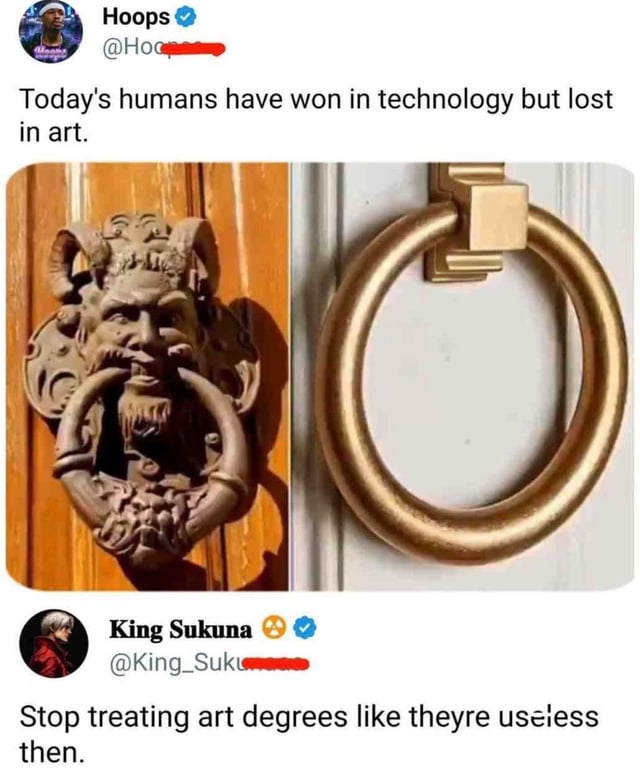
Incentives are what killed it
“Show me your incentives and I’ll tell you the outcomes”
Modernism and brutalism are both solving an economic problem. It’s to make a building as “occupiable” as possible. It has no soul or defining features for someone to hate, so it appeals maximally to as many people as possible. It also saves a lot on labour, maintenance, and material costs when designing and constructing a new build.
Also, who the hell cares about the next tenant? They aren’t paying the construction bill, and they’re going to buy it at the price I want anyways because this building is modernist/brutalist and is as fungible as possible.
“Tell me you don’t know anything about modernism without telling me you don’t know anything about modernism.”
First of all, modernism was definitely not trying to blandly appeal to as many people possible. It’s a reaction against traditional architecture and is therefore inherently contrarian. And especially so for brutalism (which is a subcategory of modernism rather than its own separate thing, BTW): you cannot tell me people don’t hate brutalism, LOL!
Second, modernism is often more expensive than traditional styles. Many of the elements of traditional architecture became “traditional” for practical reasons: sloped roofs shed water even when they aren’t perfectly constructed. Decorative moldings exist to cover up gaps and obscure corners that aren’t quite square. When you get rid of that stuff, you make the building a lot harder and more expensive to construct because everything has to be perfect: your flat roof needs to be absolutely water-tight, your carpenters have to work to much tighter tolerances, you need a damn skilled plasterer to finish your drywall perfectly fair and smooth without using ceiling texture to hide the unevenness, etc.