
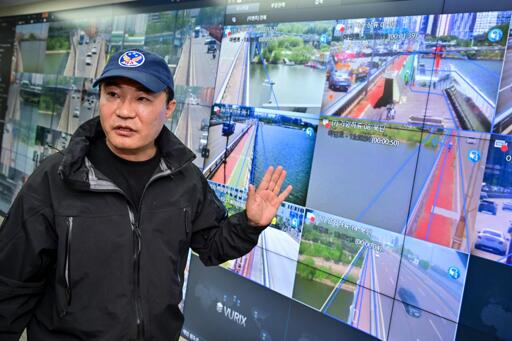
Established in 2021, the center uses artificial intelligence (AI) for comprehensive emergency response, monitoring 900 CCTV cameras across 17 of Seoul’s 21 pedestrian-accessible Han River bridges. Beyond suicide prevention, its most frequent task, the center also handles criminal tracking, traffic accidents and drug enforcement.
…
Much of that credit goes to AI, which triggers an alarm if an object identified as a person remains for more than 300 seconds in a bridge’s “loitering zones,” sections where people are able to stand for extended periods.
This is one of the good uses of AI. It is called object detection with neural networks and is a very classic use of convolutional neural networks (CNNs) in computer vision.
There was no LLM, no transformer, no huge data center necessary for training this model.Please distinguish generative from predictive AI, it means a lot to all the data scientists out there inventing cool stuff!
No, this is not a good use for AI. First, the concept here is to treat symptoms instead of the actual issue, second, stopping suicide attempts from happening isn’t the only thing AI is used for here and third, in the context of second, a 15% hallucination rate means a lot of innocent people are harassed for doing nothing wrong.
Edit, because according to the votes and both answers many people seem to have misunderstand this: the 15% false positive means too many innocent people harassed when this surveillance system is used against crime.
On the suicide issues, the AI just doesn’t solve the issue sustainably.When it comes to suicide prevention, I’d prefer having a few false positives than any false negatives.
Stopping people from dying is good.
That’s not the issue where I criticised the false positive rate though, if you read my comment carefully. I hope I made it clearer with my edit.
people only said suicide detection was a good use of AI, not crime surveillance. and nobody’s pretending stopping a suicide attempt treats the underlying issues either, and that’s still better than not stopping it
I am not very uplifted to be honest since the same technology and devices can be used for large scale surveillance.
There’s also the issue of adaptation. There’s articles now explaining this technology which means if I’m in South Korea and I want to jump off a bridge I know I’ll have to do it quickly or otherwise they’ll come and get me. For some this might be the added pressure they need to go through with it.
Ultimately the best way to prevent suicide is to make life worth living and provide support for those who are in a mental health crisis. Neither of those things are going well in SK and AI surveillance won’t fix that either.
See? AI saves lifes. Now go pend your tokens and stop using your brain, meatbag /s