

0·
26 days agoCorrect. But all code is there, so you can fork them out yourself if you want.
Correct. But all code is there, so you can fork them out yourself if you want.
Thanks for the reply! And good question. Yes, all code, including all paid features are open source too. Not just open core. There’s nothing proprietary. Some of the paid features are gated behind a license check, but it’s all part of the same repo and MIT licensed. It’s all there to inspect or fork if you want. The perpetual license however helps support development and gives the convenience of a ready-made build.
We actually moved recently from GPLv3 to MIT to be fully permissive.
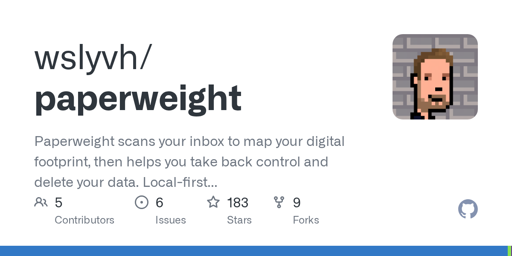
Sure, like most projects I use AI assistance a lot for most of my work these days, ngl. Its helps me plan, research and code new ideas/features and makes a lot of my work easier. Having said that, I fully understand and share people’s feelings about yolo, vibe-coded slop. I’ve been a software engineer for 20+ years. AI helps with a lot, but also feels like the honeymoon phase is wearing off actually. It doesn’t give me the joy of building stuff. I still test, review and ship everything myself. You can check my Github history that I’ve been doing this way before recent AI hype.
Either way, the idea and execution is 100% me. I’m building something I want, use, and care about myself. Whether I’ve used AI is not too relevant, imo. It’s that all alternatives have been caught selling your data (Unroll), heavily rely their centralized services or require you to give up your data in order to remove it. Which is ironic. Paperweight is the only tool I’m aware of that does this entirely local and is open-source.
P.S if its quality you’re worried about, Paperweight has been audited through Google’s CASA assessment and Apple’s developer verification (admittedly, not a super high bar).