The dream is to be young and rich so you can travel and go to nightclubs and shit… not be young, rich, and a mother of 6 children
Eventually you get tired of the nightclubs and that’s when you want kids… but influencers like MrBeast, IShowSpeed, even the Kardashians didn’t rush out with their money and have kids
In 1970, the average woman in the U.S. had her first baby at around 21 years old. That’s hard to imagine now: new federal data published in April show that in 2022, the average first-time mother was a little older than 27
The foundation for this trend was laid in the 1960s, when the birth control pill came onto the scene
it has become increasingly common for people to have children later in life for a range of reasons, including concerns about finances and child care, waiting longer to get married or find a partner, and prioritizing education, career, or leisure time during young adulthood.
it’s still far more common for people to want children than to plan to stay child-free, and that most prospective parents want more than one baby. What’s different from decades past, Guzzo says, is that people are increasingly pushing back the ages at which they have those kids, often into their 30s and beyond.

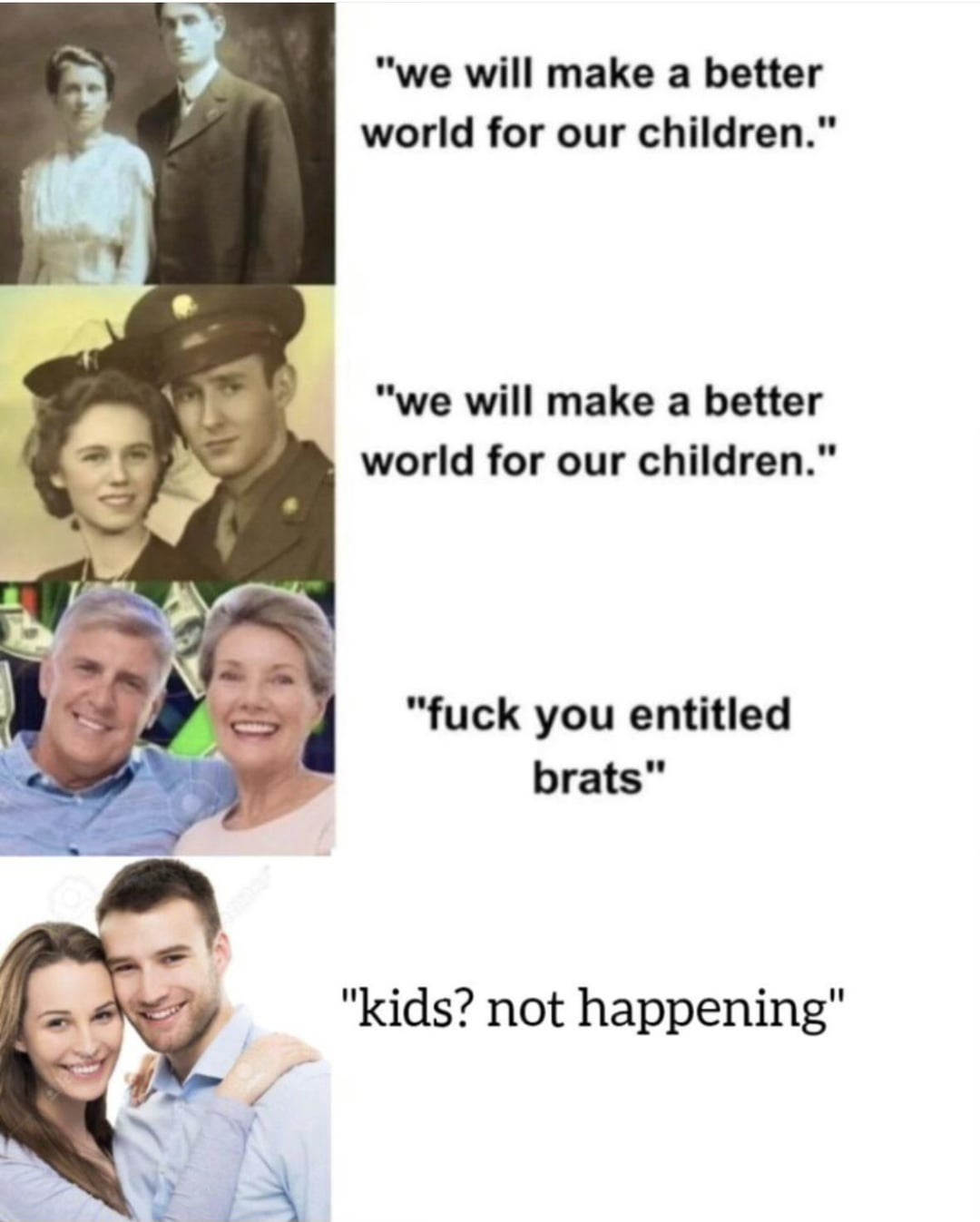
They want to stay younger longer
The dream is to be young and rich so you can travel and go to nightclubs and shit… not be young, rich, and a mother of 6 children
Eventually you get tired of the nightclubs and that’s when you want kids… but influencers like MrBeast, IShowSpeed, even the Kardashians didn’t rush out with their money and have kids
Do you have some surveys you can point me to that backs that up?
https://time.com/6965267/women-having-kids-later/
In 1970, the average woman in the U.S. had her first baby at around 21 years old. That’s hard to imagine now: new federal data published in April show that in 2022, the average first-time mother was a little older than 27
The foundation for this trend was laid in the 1960s, when the birth control pill came onto the scene
it has become increasingly common for people to have children later in life for a range of reasons, including concerns about finances and child care, waiting longer to get married or find a partner, and prioritizing education, career, or leisure time during young adulthood.
it’s still far more common for people to want children than to plan to stay child-free, and that most prospective parents want more than one baby. What’s different from decades past, Guzzo says, is that people are increasingly pushing back the ages at which they have those kids, often into their 30s and beyond.
Cool thank you