

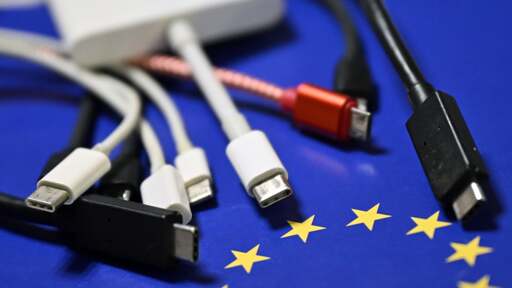
EU rules on common chargers apply to laptops from today. It means that all new laptops sold in the European Union must now support USB-C charging.
In December 2024, the rules came into force for mobile phones, tablets, digital cameras, headphones, videogame consoles, and portable speakers.
Laptop manufacturers were given a longer lead in time to allow for redesign and transition to the common charging system.
Glad you did, because I was gonna make a comment about how high end gaming laptops are now illegal in the EU.
Not sure there’s a 330w USB C going around I could use.
The limit should really be 240W, because that’s what the USB-C PD 3.1 spec goes up to.
Edit: Per reply, the regulation is designed with 240W accounted for, and updatable in case of further improvements to the standard.
When you make minimum requirements, you dont go for max. All laptops shouldnt be able to take 240W.
Laptops can be rated for whichever power level the manufacturer prefers; USB-C PD is used between the power supply and device to negotiate the maximum power level allowed for by both, so a consumer that purchases a 100W or 240W cable and power supply could still use them with a lower-rated device.
A 60W USB-C laptop can therefore stay at 60W without issue, but if a 240W laptop is produced, it should also be made to use USB-C under such a regulation.